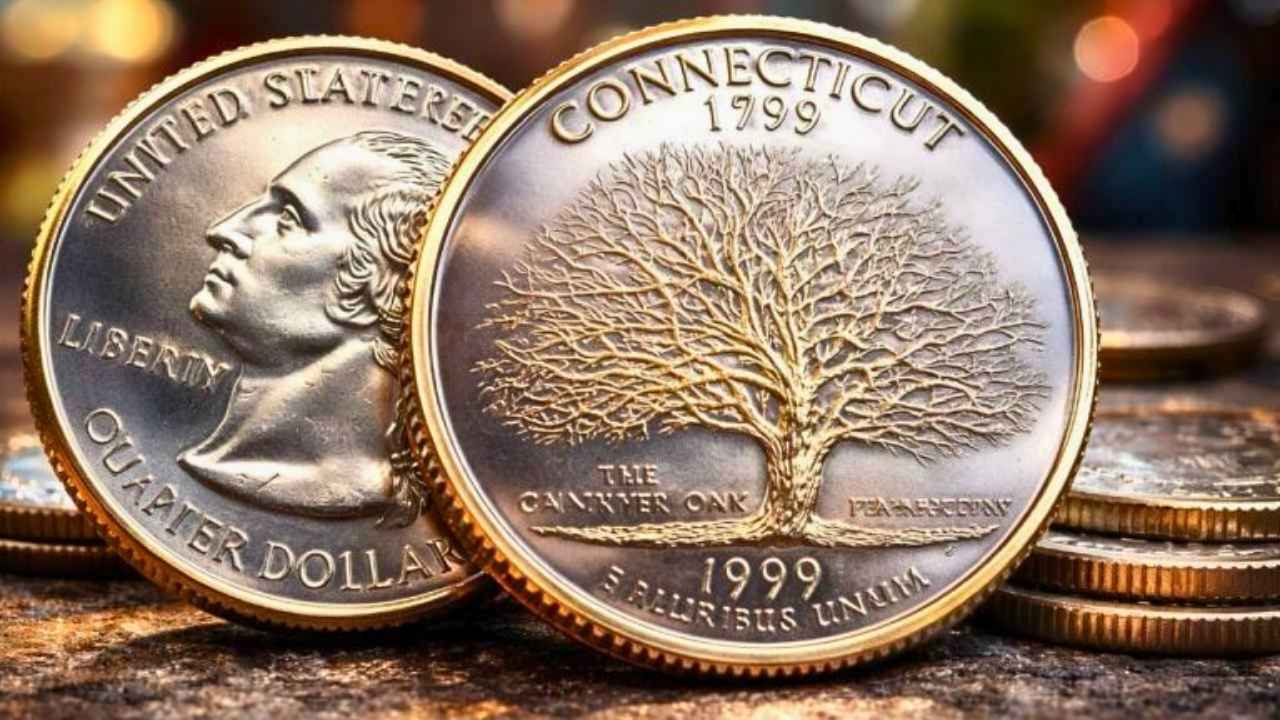
The 1999‑P Connecticut quarter is part of the U.S. Mint’s 50 State Quarters Program, which began in 1999 to celebrate each state’s unique history and symbols. Connecticut’s design features the famous Charter Oak, a tree that played a legendary role in the state’s colonial past. While millions of these coins were minted, certain rare errors and varieties have made some examples worth thousands of dollars. Collectors are always on the lookout for these hidden treasures, and understanding their value can help you spot a fortune in your pocket change.
History of the Connecticut Quarter
The Connecticut quarter was released in October 1999 as the fifth coin in the State Quarters Program. The design highlights the Charter Oak, symbolizing strength and independence. With over 1.3 billion Connecticut quarters minted across Philadelphia, Denver, and San Francisco, most are common. However, the Philadelphia‑minted 1999‑P coins are especially known for rare errors that can dramatically increase their value.

Common Features of the 1999-P Connecticut Quarter
- Minted at the Philadelphia Mint
- Features the Charter Oak on the reverse
- Standard composition of copper‑nickel clad
- Widely circulated, making most examples worth only face value
Rare Errors That Increase Value
Errors are what make certain 1999‑P Connecticut quarters worth thousands. These mistakes occurred during the minting process and are highly prized by collectors.
Double Die Errors
Some 1999‑P Connecticut quarters show doubling in the lettering or design. These double die errors are rare and can fetch prices ranging from hundreds to several thousand dollars depending on clarity and condition.
Off‑Center Strikes
An off‑center strike occurs when the coin is not properly aligned during minting. The result is a design that appears shifted. Off‑center Connecticut quarters with significant misalignment are highly collectible and can be worth $1,000 or more.
Clipped Planchets
A clipped planchet error happens when part of the coin’s blank is missing before striking. These Connecticut quarters are unusual and can command values of several hundred dollars.

Struck on Wrong Planchet
One of the rarest errors is when a Connecticut quarter is struck on a planchet intended for another denomination, such as a nickel or dime. These coins are extremely scarce and can reach values of $4,000 or more.
Factors That Affect Value
Several factors determine how much a rare 1999‑P Connecticut quarter is worth:
- Error Type: More dramatic errors bring higher prices.
- Condition: Coins in mint state or uncirculated condition are valued higher.
- Rarity: The fewer examples known, the greater the demand.
- Collector Interest: Popular errors like double dies often attract more bidders.
Chart: 1999-P Connecticut Quarter Error Values
| Error Type | Description | Approximate Value Range |
|---|---|---|
| Double Die | Doubling in lettering/design | $500 – $3,000 |
| Off‑Center Strike | Design shifted off alignment | $1,000 – $4,000 |
| Clipped Planchet | Missing portion of coin blank | $200 – $800 |
| Wrong Planchet | Struck on nickel/dime blank | $2,000 – $4,000+ |
Collecting Tips
- Always check your pocket change carefully; rare errors can appear in circulation.
- Use a magnifying glass to spot doubling or misalignments.
- Store valuable coins in protective holders to prevent damage.
- Consider professional grading to authenticate and maximize value.
- Stay updated with auction results to understand current market trends.
Key Highlights
- The 1999‑P Connecticut quarter is common, but rare errors make some worth thousands.
- Double die, off‑center strikes, clipped planchets, and wrong planchet errors are the most valuable.
- Condition and rarity play a major role in determining value.
- Some error coins have sold for $4,000 or more at auctions.
Final Words
The 1999‑P Connecticut quarter may seem ordinary, but hidden within its massive mintage are rare treasures that collectors dream of finding. From dramatic double dies to coins struck on the wrong planchet, these errors transform a simple quarter into a valuable collectible. Whether you are a seasoned numismatist or just starting out, keeping an eye out for these rare coins can turn everyday pocket change into a remarkable discovery.