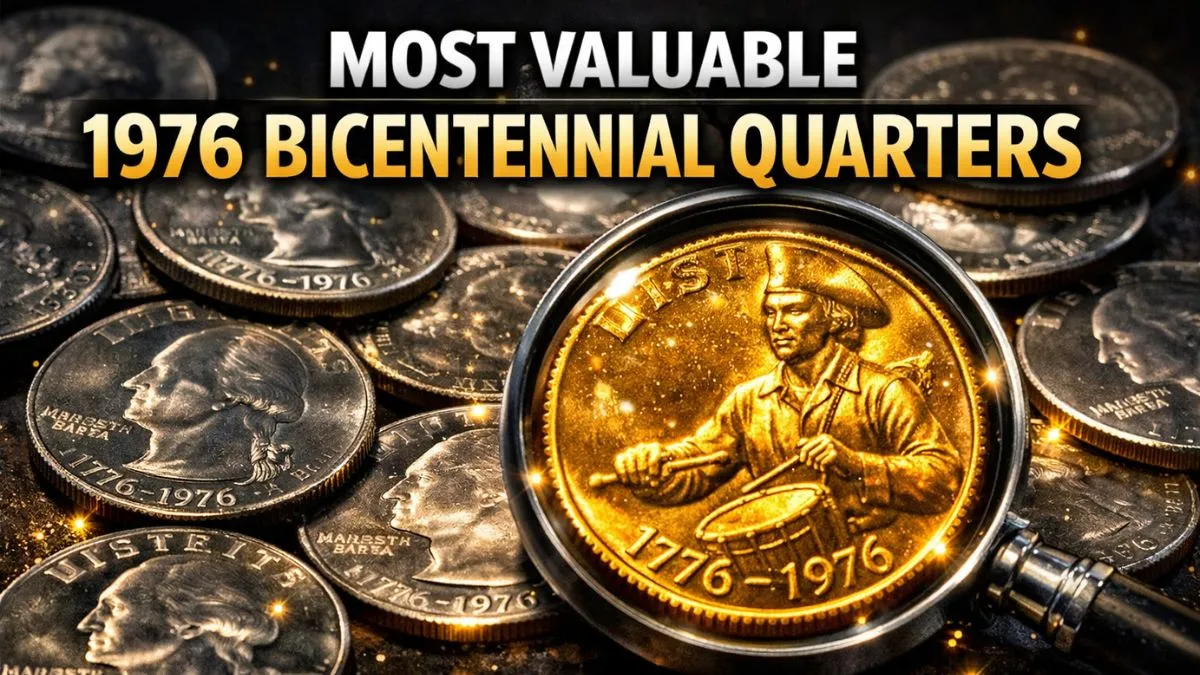
The 1976 Bicentennial Quarter is one of the most iconic coins in American history. Issued to celebrate the 200th anniversary of the nation’s independence, it features a unique design that sets it apart from regular quarters. While billions were minted, certain rare varieties and high-grade examples have become highly sought after by collectors. Even today, some of these valuable coins remain in circulation, waiting to be discovered.
The Story Behind the Bicentennial Quarter
In 1973, Congress authorized a special coinage program to commemorate the United States Bicentennial. The quarter, half dollar, and dollar coins were redesigned with patriotic themes. The quarter’s reverse showcased a colonial drummer boy with a torch surrounded by thirteen stars, symbolizing the original colonies. This design, created by Jack L. Ahr, became a lasting symbol of America’s celebration of freedom.

Minting and Varieties
The Bicentennial Quarter was produced in massive numbers across three mints: Philadelphia (no mint mark), Denver (D), and San Francisco (S). Over 1.6 billion clad quarters were struck, making them common in circulation. However, special collector editions were also minted in 40% silver, primarily at the San Francisco Mint. These silver issues are far scarcer and more valuable than their clad counterparts.
Rare Varieties That Command Value
While most Bicentennial Quarters are worth only face value, certain varieties and errors can fetch impressive sums. Some of the most notable include:

- 1976-D Doubled Die Obverse (DDO): This variety shows doubling in the inscriptions and can be worth hundreds to thousands depending on grade.
- Six-Finger Drummer Error: A rare misprint where the drummer’s hand appears to have six fingers. Collectors prize this unusual error.
- Filled “D” Mint Mark: A striking error where the Denver mint mark appears clogged or filled, increasing its rarity.
- Struck Through Grease Errors: These coins show weak or missing details due to grease on the die, making them unique collectibles.
- 1976-S Silver Proofs: High-grade silver proofs can reach values in the thousands, especially in pristine condition.
Collector Values Today
The value of a Bicentennial Quarter depends heavily on condition, mint mark, and variety. Circulated clad quarters are generally worth only 25 cents. However, uncirculated examples in Mint State (MS65) can sell for $6–$12. Silver issues range from a few dollars in circulated condition to nearly $20,000 for top-graded specimens. Rare error coins, such as the doubled die or six-finger drummer, can command anywhere from $150 to over $8,000 depending on grade.
Why They Still Matter
Even though most Bicentennial Quarters are common, they hold sentimental and historical value. Their unique design makes them instantly recognizable, and the possibility of finding a rare variety in circulation adds excitement for collectors. For many, these coins are not just currency but pieces of American heritage.

Tips for Collectors
- Check Mint Marks: Look for “D” or “S” marks, as these can indicate rarer varieties.
- Inspect for Errors: Doubling, filled mint marks, or unusual details can signal valuable coins.
- Preserve Condition: Store coins properly to maintain their grade and value.
- Seek Professional Grading: Rare varieties should be authenticated and graded by reputable services like PCGS or NGC.
Key Highlights
- The 1976 Bicentennial Quarter was minted to celebrate America’s 200th anniversary.
- Over 1.6 billion clad coins were produced, but silver issues and error varieties are far rarer.
- Valuable varieties include the 1976-D Doubled Die Obverse, six-finger drummer error, and filled “D” mint mark.
- Circulated clad coins are worth face value, while rare varieties and silver proofs can reach thousands of dollars.
- Collectors continue to search circulation for hidden treasures, making these coins timelessly popular.
Final Words
The 1976 Bicentennial Quarter remains one of the most beloved commemorative coins in U.S. history. While most examples are common, rare varieties and pristine silver issues hold significant collector value. Whether you are a seasoned numismatist or a casual coin enthusiast, keeping an eye out for these quarters in your pocket change could lead to an exciting discovery. They are not only a reminder of America’s bicentennial celebration but also a symbol of how history can live on in everyday currency.