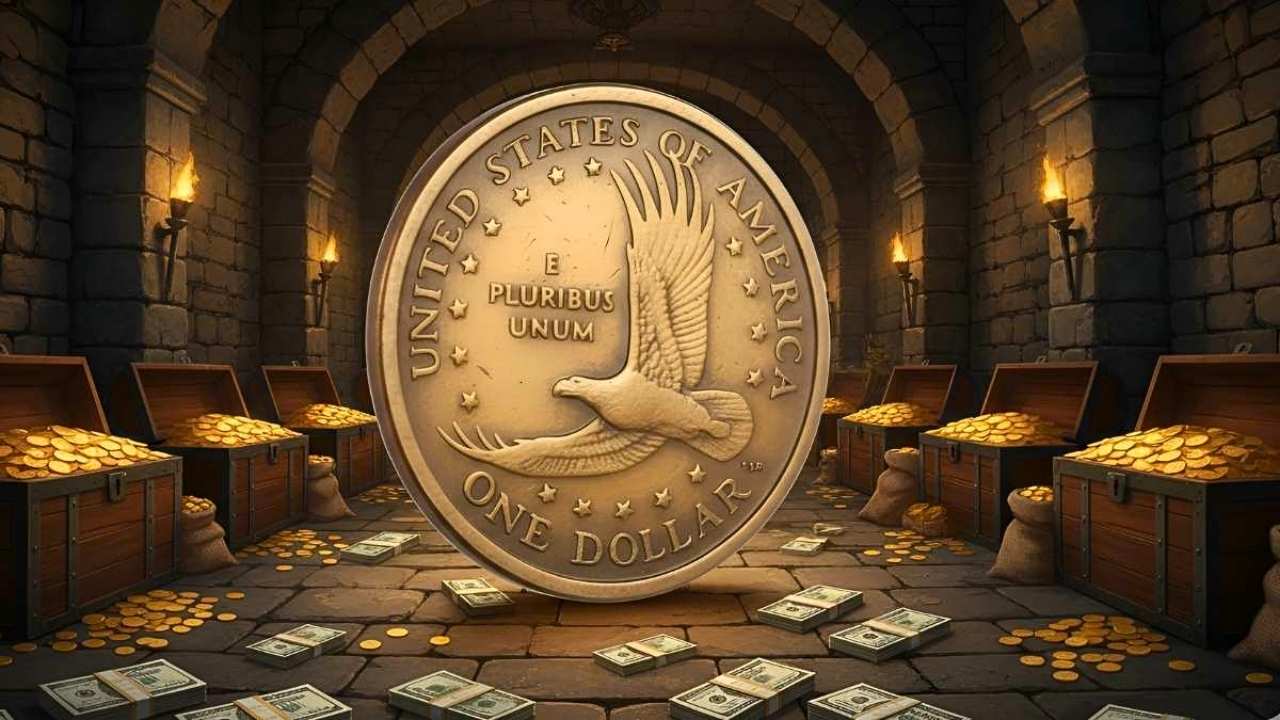
The Sacagawea Dollar, first released in 2000, was designed to honor Sacagawea, the Shoshone woman who guided Lewis and Clark during their expedition. With its golden color and distinctive design, the coin quickly became a favorite among collectors. While most Sacagawea Dollars are common and circulate at face value, certain rare minting errors and varieties have made some examples worth thousands. In 2026, collectors continue to hunt for these hidden treasures, with error coins commanding surprising prices.
History of the Sacagawea Dollar
The Sacagawea Dollar was introduced to replace the Susan B. Anthony Dollar. Designed by Glenna Goodacre, the obverse features Sacagawea carrying her infant son, Jean Baptiste. The reverse originally depicted a soaring eagle, later replaced with rotating designs under the Native American $1 Coin Program. The coin was struck in a manganese‑brass alloy, giving it a golden appearance, though it contains no actual gold.

Design Features
- Obverse: Sacagawea with her infant son.
- Reverse: Eagle (2000–2008), Native American themes (2009–present).
- Mint Marks: P (Philadelphia), D (Denver), S (San Francisco).
- Composition: Copper core clad with manganese brass.
Why Sacagawea Dollar Errors Are Valuable
Most Sacagawea Dollars are common, but certain factors make some worth far more than face value:
- Minting errors such as wrong planchet strikes or doubled dies.
- Special varieties like the “Cheerios Dollar.”
- Proof coins struck for collectors.
- Exceptional condition certified by professional grading services.
- Collector demand for unique varieties and historical significance.
Rare Varieties and Errors
2000 Cheerios Dollar
A small number of Sacagawea Dollars were distributed in Cheerios cereal boxes as a promotion. These coins feature a different reverse design with enhanced eagle tail feathers, making them extremely rare and valuable.

2000-P Mule Error
One of the most famous errors in U.S. coinage history, this coin features the obverse of a Washington Quarter paired with the reverse of a Sacagawea Dollar. Only a few dozen are known to exist.
2000-P Wounded Eagle
This variety shows a die gouge across the eagle’s body, resembling a wound. Collectors prize this error for its distinct appearance.

Wrong Planchet Errors
Some Sacagawea Dollars were mistakenly struck on planchets intended for other coins, creating extreme rarities.
Double Die Errors
Certain Sacagawea Dollars show doubling in the date or lettering, making them collectible.

Proof Issues
San Francisco struck proof versions of the Sacagawea Dollar, which are more valuable than circulation strikes.
Value Chart
| Coin | Description | Approximate Value Range |
|---|---|---|
| 2000 Cheerios Dollar | Rare promotional issue | $5,000 – $25,000+ |
| 2000-P Mule Error | Quarter obverse, dollar reverse | $50,000 – $200,000+ |
| 2000-P Wounded Eagle | Die gouge variety | $500 – $5,000+ |
| Wrong Planchet Error | Struck on wrong metal | $1,000 – $10,000+ |
| Double Die Error | Doubling in design | $100 – $1,000+ |
| Proof Issues | Collector strikes | $10 – $50+ |
Collecting Tips
- Always check mint marks carefully, as they can dramatically affect value.
- Proof and error coins are more valuable than circulation strikes.
- Use magnification to spot doubling or unusual features.
- Store coins in protective holders to preserve condition.
- Consider professional grading to authenticate rare varieties.
Key Highlights
- The Sacagawea Dollar was introduced in 2000 and remains a popular collectible.
- Rare varieties include the Cheerios Dollar, Mule Error, and Wounded Eagle.
- Errors such as wrong planchet strikes and double dies can make coins worth thousands.
- Condition, rarity, and mint marks are the most important factors in determining value.
- Collectors in 2026 continue to track value trends and hunt for hidden treasures.
Final Words
The Sacagawea Dollar is more than just a coin; it is a tribute to Native American history and a symbol of American heritage. While most examples are worth only face value, rare varieties and high‑grade coins can be worth thousands, even hundreds of thousands. For collectors, the thrill of discovering one of these treasures is unmatched. Whether you are just beginning your coin collecting journey or are an experienced numismatist, Sacagawea Dollar errors offer both historical significance and the excitement of hidden fortunes that continue to inspire admiration in 2026 and beyond.