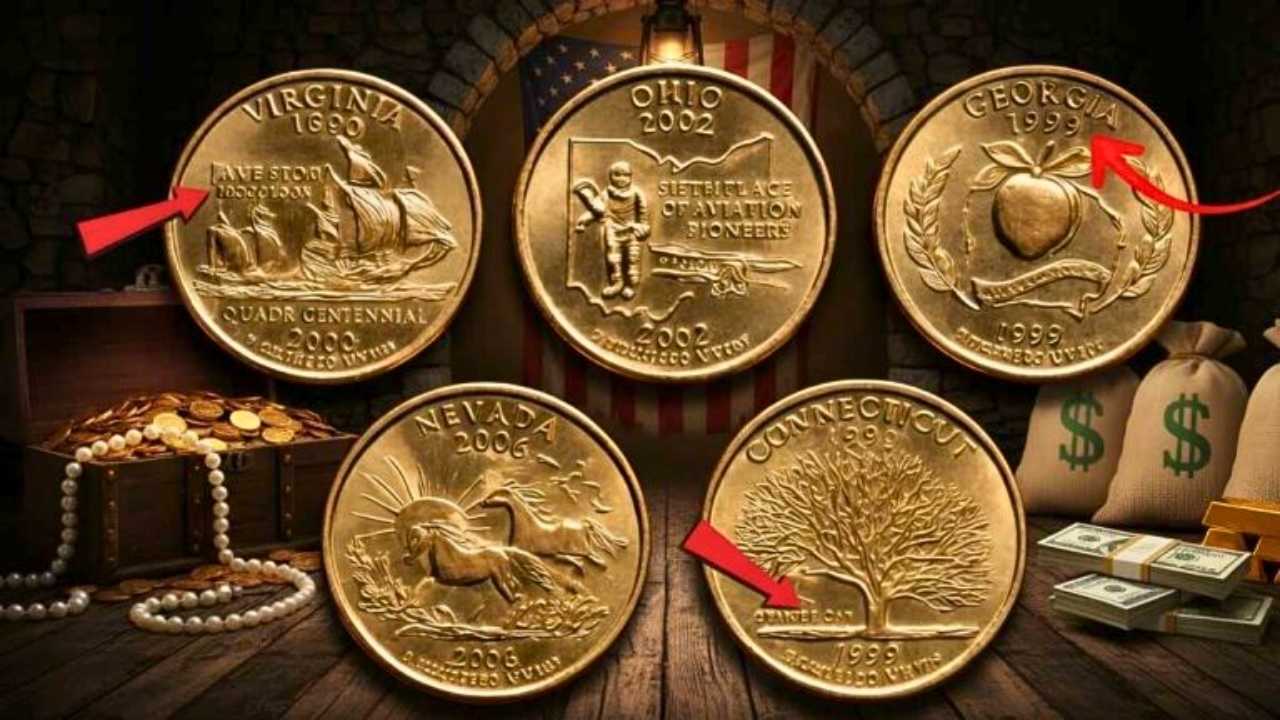
Top 5 Rare State Quarters Worth Big Money has always been more than just a hobby. For many enthusiasts, it is a journey into history, artistry, and hidden treasures that can sometimes be worth a fortune. Among the most popular collectible coins in the United States are the State Quarters, released between 1999 and 2008. While millions were minted, only a handful stand out as rare and valuable. In 2026, collectors continue to hunt for these elusive pieces, and some can fetch thousands of dollars if identified correctly. This guide explores five rare State Quarters that are worth big money, offering insights into their unique features, values, and how to spot them.
The Legacy of the State Quarters Program
The State Quarters Program was launched by the U.S. Mint in 1999 to honor all 50 states. Each quarter featured a unique design representing the state’s history, culture, or landmarks. Over 34 billion coins were produced, making it one of the most successful coin programs in American history. Yet, within this massive production, errors, low mintages, and special varieties created rare gems that collectors prize today.
Why Some State Quarters Are Valuable
Not every quarter from the program is worth more than face value. The value depends on several factors:
- Minting Errors: Mistakes during production, such as double strikes or off‑center designs, can make a coin rare.
- Low Mintage Numbers: States with fewer coins produced are harder to find.
- Condition: Coins in pristine, uncirculated condition are worth more.
- Unique Varieties: Special editions or design quirks add to rarity.
Five Rare State Quarters Worth Big Money in 2026
1. 2004 Wisconsin Quarter (Extra Leaf Error)
This quarter is famous for its “extra leaf” variety on the corn stalk. Two versions exist: the extra high leaf and the extra low leaf. These errors were accidental but became highly sought after.
- Estimated Value: $300 to $1,500 depending on condition.
- Identification Tip: Look closely at the corn stalk on the reverse side for the extra leaf.
2. 1999 Delaware Quarter (Spitting Horse Error)
The very first coin in the program carries one of the most iconic errors. A die crack makes it appear as though Caesar Rodney’s horse is spitting.
- Estimated Value: $50 to $250.
- Identification Tip: Examine the horse’s mouth for a line extending outward.
3. 2005 Kansas Quarter (In God We Rust Error)
A striking error where the “T” in “Trust” is missing, leaving the phrase “In God We Rust.”
- Estimated Value: $100 to $500.
- Identification Tip: Check the motto on the obverse side for missing letters.
4. 2000 South Carolina Quarter (Off‑Center Strikes)
Some South Carolina quarters were struck off‑center, creating a unique misalignment.
- Estimated Value: $200 to $800.
- Identification Tip: Look for designs that are not centered properly on the coin.
5. 2002 Mississippi Quarter (Double Die Error)
This coin shows doubling in the lettering, especially around “E Pluribus Unum.”

- Estimated Value: $150 to $600.
- Identification Tip: Use a magnifying glass to spot doubled letters.
Chart: Rare State Quarters and Their Values
| State Quarter | Year | Error/Variety | Estimated Value Range |
|---|---|---|---|
| Wisconsin | 2004 | Extra Leaf (High/Low) | $300 – $1,500 |
| Delaware | 1999 | Spitting Horse | $50 – $250 |
| Kansas | 2005 | “In God We Rust” | $100 – $500 |
| South Carolina | 2000 | Off‑Center Strike | $200 – $800 |
| Mississippi | 2002 | Double Die | $150 – $600 |
How to Identify Rare Quarters
Collectors often rely on magnifying glasses, coin reference books, and online resources to spot errors. Lighting is crucial when examining coins, as small cracks or doubled letters can be missed easily. It is also wise to compare your coin with verified images from trusted numismatic sources.
Preserving the Value of Your Coins
Owning a rare quarter is only half the journey. Preserving its condition is equally important.

- Store coins in protective holders to prevent scratches.
- Avoid cleaning coins, as this can reduce their value.
- Keep them in a cool, dry environment to prevent tarnishing.
Key Highlights
- The State Quarters Program produced billions of coins, but only a few are rare and valuable.
- Errors such as extra leaves, missing letters, and off‑center strikes make certain quarters worth hundreds or even thousands.
- Condition plays a major role in determining value; uncirculated coins are prized.
- Collectors in 2026 continue to seek out these five rare quarters as treasures of American numismatics.
Final Words
The thrill of coin collecting lies in the possibility of discovering hidden value in everyday change. While most State Quarters are common, a select few stand out as rare gems that can bring significant financial rewards. By learning to identify these coins and preserving them properly, collectors can turn a simple hobby into a rewarding investment. In 2026, the hunt for valuable State Quarters remains as exciting as ever, reminding us that history and fortune can sometimes be found in the palm of our hand.